



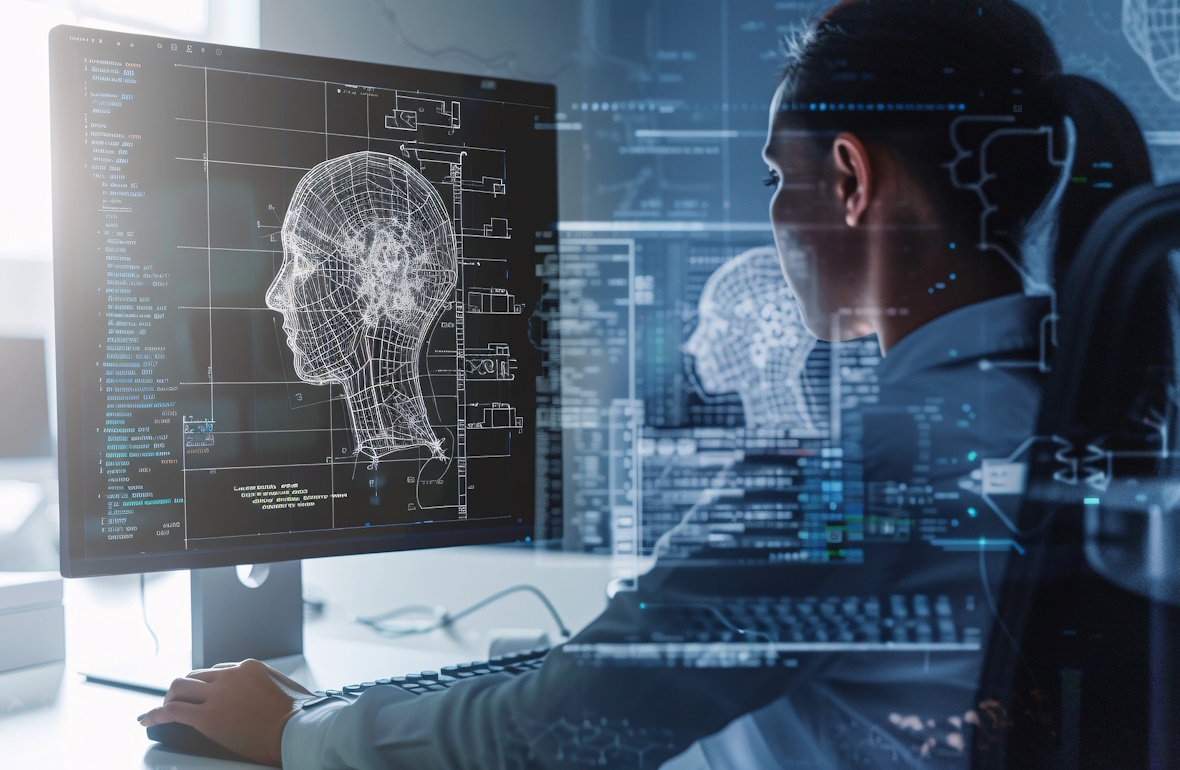
With the development of novel digital technologies a more efficient, customer‑centric, and forward‑thinking support structure is getting more and more relevant: Support 2.0The integration of Artifical Intelligence (AI) in bestehende Systeme ermöglicht es Unternehmen, den Kundensupport zu transformieren, die Produktivität zu steigern und gleichzeitig Kosten zu senken.
The evolutionary development of support
Traditionally, support structures relied heavily on human labor. Customer inquiries had to be processed manually — a procedure that was often time‑consuming, costly, and inefficient. With the rise of digitalization, this picture changed fundamentally. AI‑based systems can now automatically generate responses to frequently asked questions, significantly reducing the workload for support teams. Customers receive quick assistance without the need for direct employee intervention. The result: greater efficiency and a noticeably improved customer experience.
The Role of AI in Support 2.0
The key advantage of AI is that companies no longer act merely reactively, but can proactively address the needs of their customers. AI‑powered chatbots and intelligent virtual assistants (IVAs) are available around the clock and provide immediate assistance. Customers benefit from quick responses and a service that is accessible at any time. For companies, this not only leads to higher customer satisfaction but also to significant cost reductions and improved scalability of their support processes.
Opportunities and Challenges of Digitalization
Digitalization and the use of AI offer tremendous opportunities: companies can expand their global reach, strengthen customer engagement, and streamline processes. At the same time, new challenges emerge. Automation requires adjustments to existing work structures and the upskilling of employees, who increasingly focus on more complex tasks. Striking the right balance between automated processes and human expertise becomes a critical factor for long‑term success.
Support structures 2.0 in practice
Many companies have already recognized the advantages of AI‑powered support systems and are using them successfully. While simple inquiries are handled by chatbots, trained support staff take over the processing of more complex issues. This interplay between automation and human expertise enables faster resolution times, optimized resource utilization, and an overall improved customer experience.
Digitalization and innovation as strategic tools for sustainability
The implementation of AI and digitalization in support is far more than a technical upgrade. It is a strategic step toward sustainable customer service. Automated communication reduces costs, conserves resources, and enables employees to focus on more demanding tasks. Companies that adopt these technologies early gain a clear competitive advantage and position themselves for long‑term success in an increasingly digital marketplace. Support structures 2.0 in practice gain not only a competitive advantage, but also position themselves as innovative and future‑oriented players in the market.
Conclusion
The combination of digitalization and artificial intelligence fundamentally transforms customer support. Support 2.0 stands for efficiency, customer centricity, and sustainability — and thus represents a decisive step toward the future of customer service.
Would you like to learn more about how AI and digitalization can revolutionize your support operations? We will show you the possibilities.
Arrange a non-binding conversation